
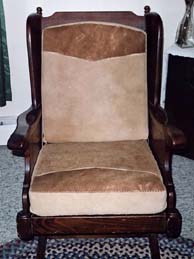
Hey, why not! (click picture for full size view).
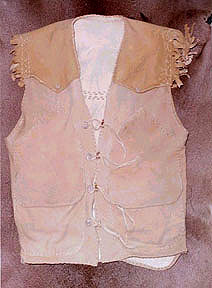
The use of two smoke colors and lacing decorate this vest....and pockets make it extra useful.
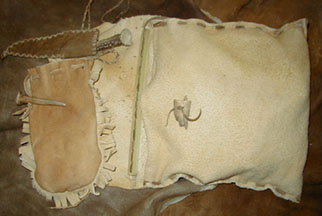
Notice the way Vaughn used buckskin of contrasting colors to show off the fancy stitching on his knife sheath. Also notice how he sewed in a piece of wood (rivercane?) to stiffen the opening of his large pouch. Click photo for detail.
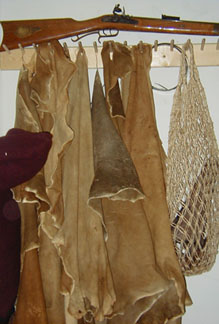
Finished hides by Vaughn Terpack.
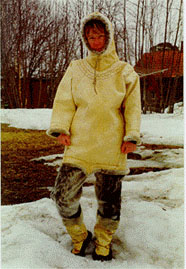
Lotta has researched and learned directly from various northern Athapaskan and Inuit women. She is way ahead of most of us in understanding the tanning and use of hair-on hides. Lotta is the author of Leather: Preparation and Tanning by Traditional Methods which we review on this site.
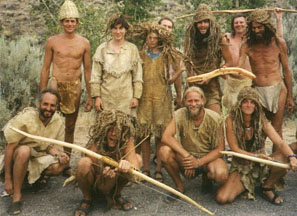
With years of practice and eating right, you too could look like this! From left to right: (top row) Mike Clinchy, Peg Mathewson, Kole Riggs, Matt Richards, Walt & Jim Riggs. (bottom row) Jeff 'Roadkill' Damm, John Mein, Ron Macy & Michelle Richards
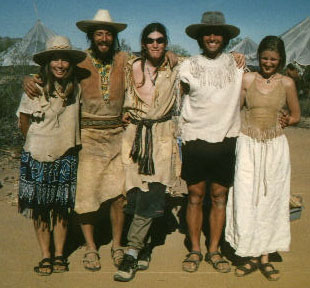
Erin Sage, David Holliday, Zack Clinton, Josh Sage & Barbara. The top part of David's shirt was rubbed with red ochre pigment, and Josh's shirt was lightly smoked and washed to the point that its real white.
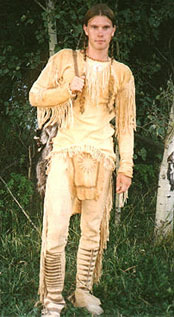
Check out the way Chris painted a black walnut hull dye onto his skins to make some really outrageous designs on his breech-clout and leggings.
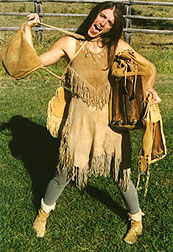
You can see a lot more of Michelle's custom garments and bags at her website Buckskin Designs.
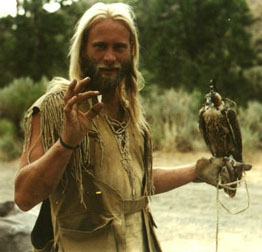
Flintknapper, falconer, and hunk.
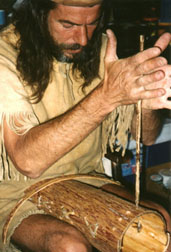
Jimmy Riggs using a flint tipped hand-drill to drill holes into a juniper bark berry basket.
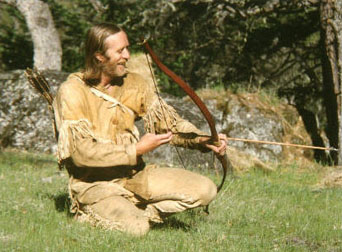
Laughing with bow.
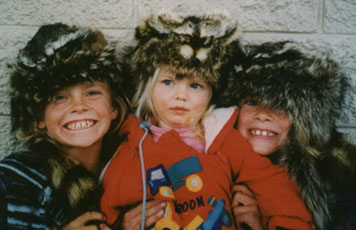
Tyree, Tikla, and Teale with braintanned 'Coon skin caps.
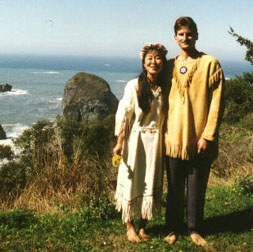
Wedding garments made by David Rose (Shéom). The white dress was not smoked.
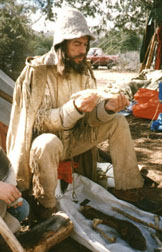
Jim is the infamous author of Blue Mountain Buckskin and the first person to show me the magic of brain tanning a hide, one super hot day in the high desert of eastern Oregon. Jim also hosts the Knap-In at Glass Buttes in eastern Oregon. Its a free-for-all campout and sharing of flintknapping and other aboriginal skills that lasts for one to three weeks in March every year. Information on how to contact Jim is in the Directory of Tanners.
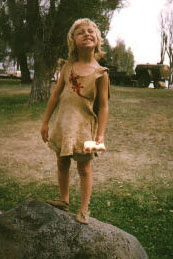
Life is good.